
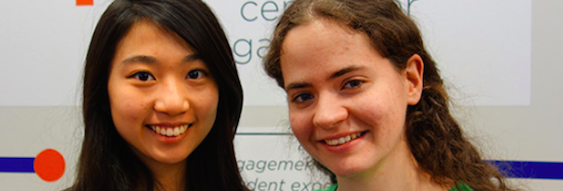
 Two teams of Princeton University students have received $10,000 grants from the Projects for Peace program, which supports new and creative ideas for promoting peace around the world. This summer, seniors Darya Koltunyuk and Stephanie Liu plan to introduce chamber music to young people in New York City; and Haraya Buensuceso, a sophomore, and Jacob Scheer, a senior, aim to bring together budding entrepreneurs to address the issue of climate change in the Philippines.
Category Archives: Uncategorized
Trevino named Graduate School associate dean for diversity and inclusion
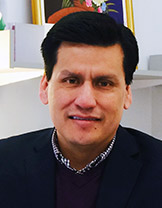
Dale Trevino, whose career has focused on promoting diversity in higher education, will become the associate dean for diversity and inclusion at Princeton University’s Graduate School. His appointment is effective July 1.
Princeton consortium formed to visualize Big Data
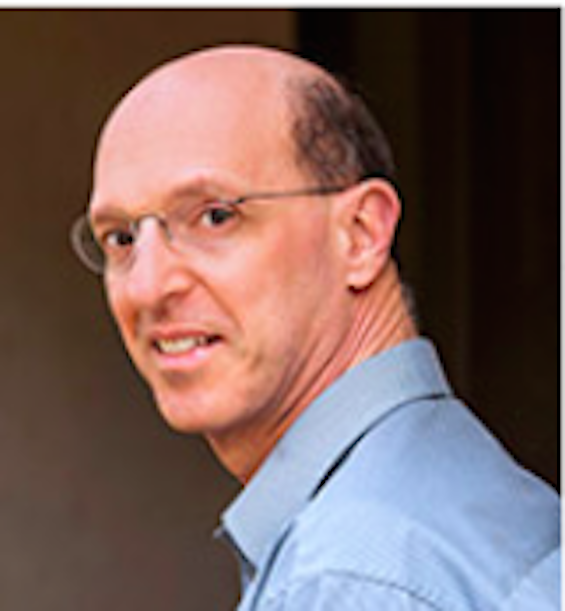 If a picture is worth a thousands words, a computer graphic is worth millions. With that in mind, Princeton University has formed a consortium that will share efforts to turn mountains of scientific data into eye-friendly computer visualizations.
The Rice Crisis: Tracking an asset-price bubble in the check-out line
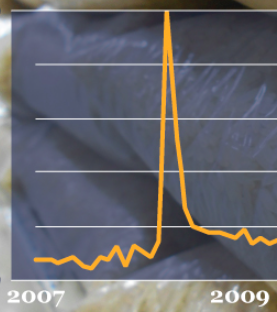 Princeton economist Harrison Hong has spent much of his career working to understand how and why asset-price bubbles form, studying the dot-com bubble in stock prices from 1997 to 2000 and the run-up in global commodity prices from 2003 to 2008. His latest insights, though, come from the check-out line at your local grocery store.
$10 million gift from alumnus funds Music Building at Princeton
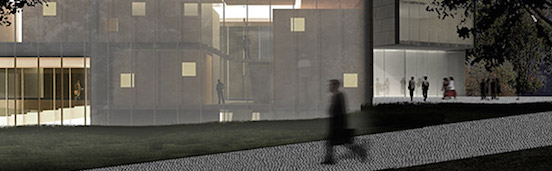 A Princeton alumnus and his wife have given $10 million for the Music Building that is part of the University’s arts complex under construction near University Place and Alexander Street. The building eventually will be named by the donors, who wish to remain anonymous for now.
Advanced material for prosthetic limbs scheduled for launch to Space Station
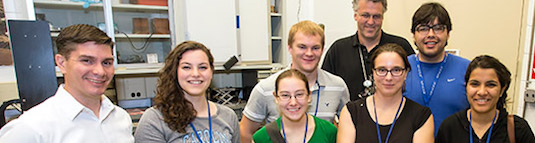 Lenore Rasmussen’s dream of developing a synthetic muscle that could be used to make better prosthetic limbs and more responsive robots will literally become airborne at 4:33 p.m. on April 13 when her experiment will rocket off to the International Space Station from Cape Canaveral in Florida. Rasmussen, a synthetic polymer chemist and founder of Ras Labs, has worked closely with researchers and engineers at the Princeton Plasma Physics Laboratory (PPPL) to develop the material’s ability to adhere to metal.
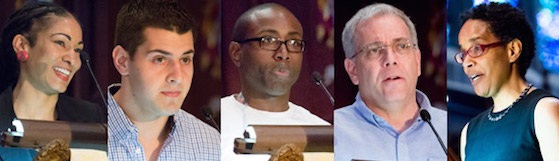
Chapel gathering focuses on understanding and overcoming differences
Student engineers’ project expands access to clean water in Kenyan village
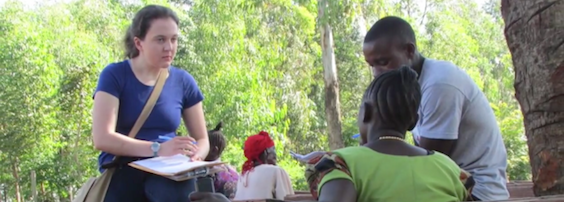 In 2012, Swahili lecturer Mahiri Mwita approached Princeton University’s chapter of Engineers Without Borders (EWB) with the idea of starting a project in the Kuria District of Kenya where he grew up. Three years later, a team of Princeton engineering students has helped design and build an award-winning rainwater catchment system there to provide clean, reliable water, and the group plans to build another system this summer.
James Olsen: Perspective on the world’s biggest particle collider coming online again
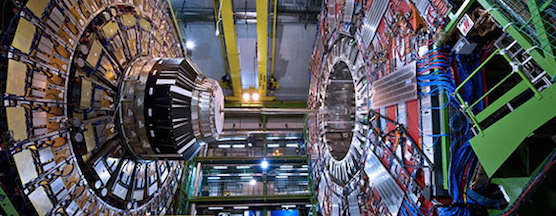 Numerous Princeton University researchers will be ready once the Large Hadron Collider is “switched on” after a two-year hiatus during which it has been upgraded to run at a higher energy. Princeton physics professor James Olsen, who oversees all physics results for the collider’s Compact Muon Solenoid (CMS) detector, discusses the discoveries that lay ahead at the LHC. Having uncovered the Higgs particle during its first run, the collider will now be used to produce insights into some of the universe’s foremost mysteries, including the nature of dark matter and a theory known as supersymmetry.
Princeton University Library acquires philosopher Derrida’s personal library
 The Princeton University Library has acquired the personal working library of philosopher Jacques Derrida, who died in 2004. Derrida, an Algerian-born French Jewish philosopher, is considered one of the 20th century’s most influential thinkers, writers and critics in the fields of literary criticism, philosophy, art and architecture, linguistics, and political theory, among others.
Class snapshot: ‘The New Jim Crow’
 This semester, 43 Princeton undergraduates are exploring the political development of America’s racially disparate crime policy in the course “The New Jim Crow: U.S. Crime Policy from Constitutional Formation to Ferguson.” The course, being taught for the first time, is crosslisted with the Center for African American Studies and the Department of Politics.
Battery bounce test often bounces off target
 Researchers at Princeton University have found that the common test of bouncing a household battery to learn if it is dead or not is not actually an effective way to check a battery’s charge.
Economist Krueger offers first-hand look back at GM, Chrysler rescue
Alan Krueger, a Princeton economist and former economic adviser to President Barack Obama, looks back at the rescue of General Motors and Chrysler during the financial crisis.
Antibiotic effectiveness imperiled as use in livestock expected to increase 67 percent by 2030
Princeton University-led research found that antibiotic consumption in livestock worldwide could rise by 67 percent between 2010 and 2030, and possibly endanger the effectiveness of antimicrobials in humans.
6.99 percent of applicants in the Class of 2019
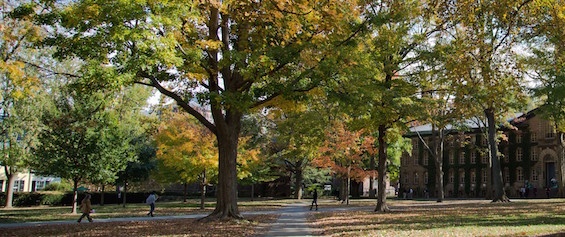 Princeton University has offered admission to 1,908 students, or 6.99 percent of the 27,290 applicants for the Class of 2019, in what is the University’s most selective admission process to date. Last year, the University’s admission rate was 7.28 percent. The class size is expected to be 1,310 students for the Class of 2019.
‘First-gen’ students and faculty connect over dinner
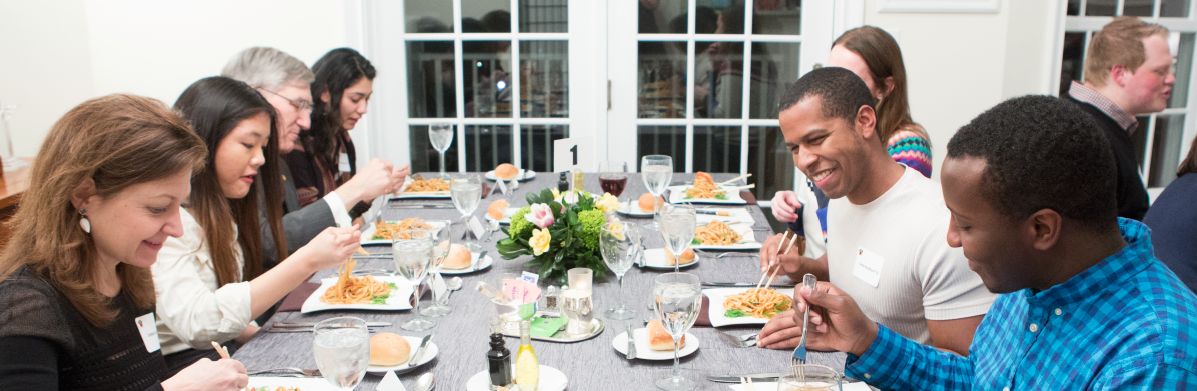 First-generation college students often experience university life differently than many of their classmates. Freshman Matthew Choi Taitano cherishes the bed in his dorm after sleeping for years on the couch or floor at home. The first time junior Dallas Nan’s family will visit campus will be when he graduates. Before his freshman year of college, Professor Robert George had never written a paper that was more than a book report. Such personal stories were shared during a dinner for Princeton University students and faculty who are among the first in their families to attend college.
Schmidt fund awards promote new technologies in computation and health
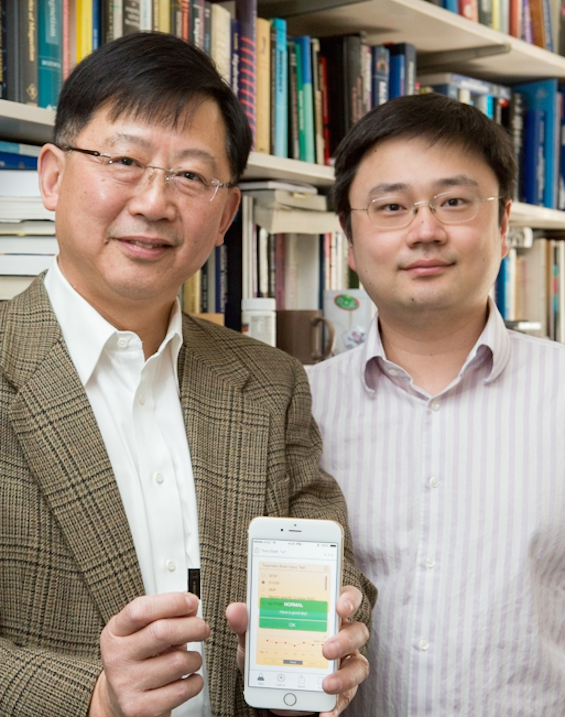 Two exploratory and promising research projects — a quantum computer based on a recently observed exotic particle and a smartphone that could replace laboratory tests in healthcare settings — have been awarded funding at Princeton University through the Eric and Wendy Schmidt Transformative Technology Fund.
Nash receives Abel Prize for revered work in mathematics
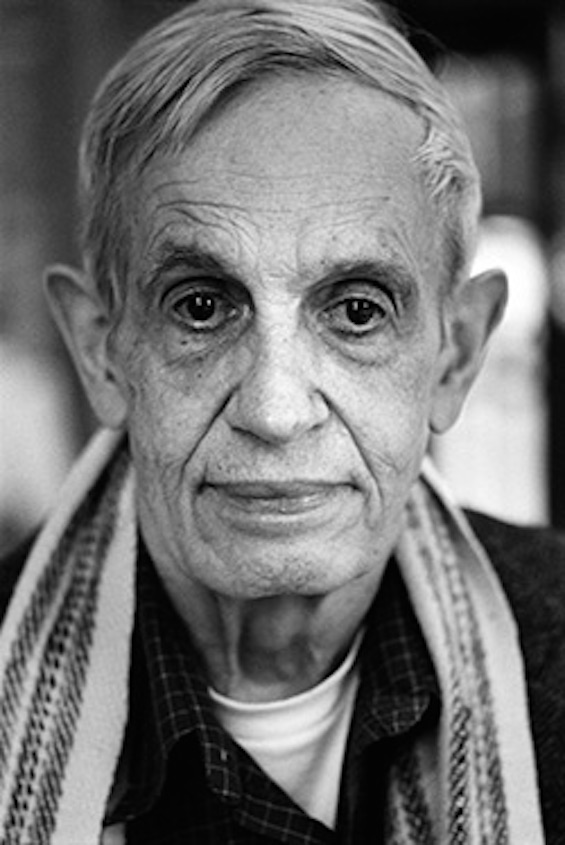 Princeton University mathematician John Nash received the 2015 Abel Prize from the Norwegian Academy of Science and Letters for his seminal work on partial differential equations, which are used to describe the basic laws of scientific phenomena. The award is one of the most prestigious in the field of mathematics and includes an $800,000 prize. Nash shares the prize with longtime colleague Louis Nirenberg, a professor emeritus at New York University’s Courant Institute of Mathematical Sciences.
Class snapshot: ‘The Artist at Work’
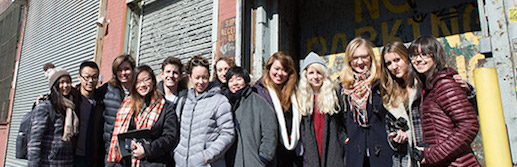
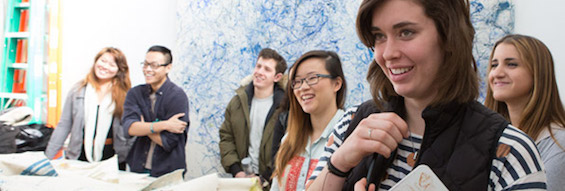 This spring, 13 Princeton undergraduates are exploring the artist’s studio from historical, contemporary, physical and conceptual perspectives in the course “The Artist at Work.”
Fernández-Kelly shines light on overlooked communities
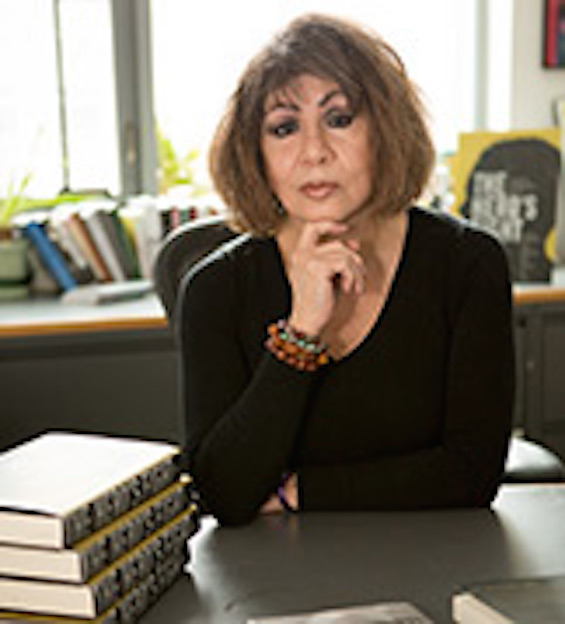 The people of West Baltimore populate Princeton sociologist Patricia Fernández-Kelly’s recently released book, “The Hero’s Fight: African Americans in West Baltimore and the Shadow of the State.”