
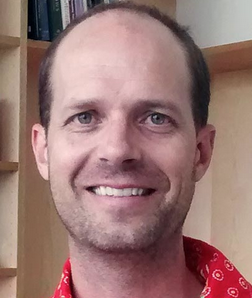
 The brain is the ultimate big-data problem. Its billions of neurons give rise to numerous abilities, such as making decisions, interpreting color and even recognizing your best friend.Jonathan Pillow, a Princeton University assistant professor of psychology and thePrinceton Neuroscience Institute, aims to understand the brain by using math and statistics to make sense of the reams of information collected by brain-imaging studies.
Category Archives: Uncategorized
Nozomi Ando: pushing the limits of x-ray to unravel the structure of enzymes
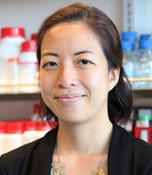 The projects at the Ando lab aim to push the limits of using X-ray-based methods in structural enzymology, which is the study of the structure of enzymes such as those responsible for cellular metabolism and DNA replication. Unraveling the structure of these incredibly complex molecules helps scientists understand how the enzymes operate in these biological processes.
Janeway gift establishes fund to deepen connections between study of finance, other fields of economics
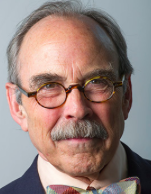 A $5.6 million gift from investor William H. Janeway, a member of Princeton’s Class of 1965, has established a fund that will support collaborative teaching and research in finance and other fields of economics at Princeton University.
Summer program introduces high school students to laboratory research
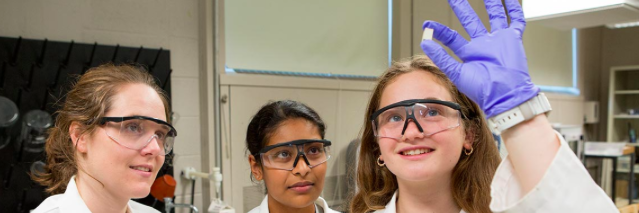
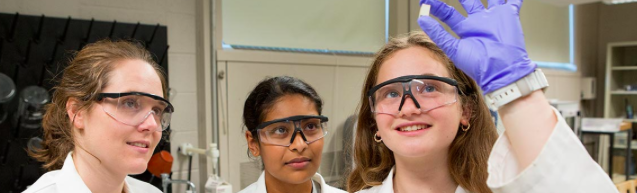 Around 30 high school students are conducting research on campus this summer with Princeton’s Laboratory Learning Program. The program provides motivated students with the opportunity to learn firsthand what it is like to participate in university-level research.
Birkelund gift funds new certificate program in history and diplomacy
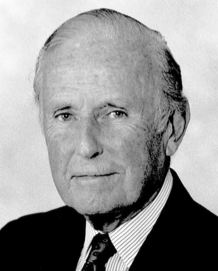 A $5 million gift from investment executive John P. Birkelund, a member of Princeton’s Class of 1952, has established the Program in History and the Practice of Diplomacy at the University. The new undergraduate certificate program, available to students beginning in the 2015–16 academic year, will provide preparation for careers in governmental and nongovernmental organizations (NGOs) that preserve stability and improve lives around the world.
Pletcher named director of medical services at Princeton University
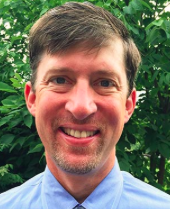 Dr. Jonathan Pletcher, whose career has focused on adolescent and young adult medicine, will become the next director of medical services for Princeton University Health Services (UHS). His appointment is effective Sept. 14.
International internships enable students to work and serve across the world

The fellowships experience: A student perspective
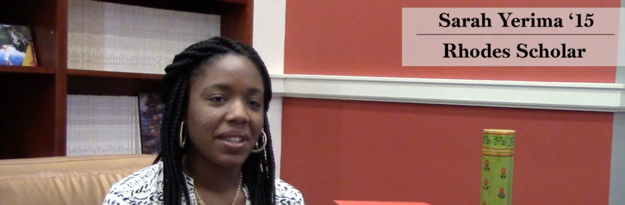
The Office of International Programs advises undergraduate students and alumni of Princeton University about fellowships, scholarships, and grants. Princeton students and recent graduates describe their experiences with the fellowships application process.
Chew on this: Examining racial identity one literary bite at a time
 The class of “Food, Literature and the American Racial Diet” taught by Anne Cheng, a professor of English and African American studies, embarked on a comparative racial-ethnic literary journey, delving into works by Asian American, African American, Jewish American and Latino authors, journalists and film directors. With the help of the new Campus Dining initiative led by Executive Director Smitha Haneef to support students’ academic experience, students shared their own experiences with culture and food by creating dishes presented and tasted at the “Princeton Feast” held April 30.
Clarence Brown, pioneer in modern Russian literature and translation, dies
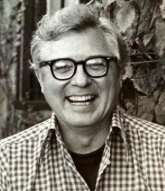 Clarence Brown, professor of comparative literature, emeritus, at Princeton University, died in his sleep July 18 after a long illness in Seattle, where he moved after retiring in 1999. He was 86.
As he prepares to leave PPPL in 2016, Smith reflects on five decades in physics and at Princeton
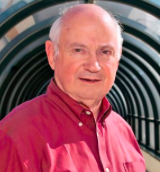 As a young man, A.J. Stewart “Stew” Smith won the Canadian National Lacrosse Championship as a member of a powerful Vancouver, British Columbia, club team. That early success and love of teamwork foreshadowed an illustrious career in which Smith has played leading roles as an educator, particle physicist and administrator coordinating vast, vital research efforts.
Day named assistant vice president for Princeton Office of Communications
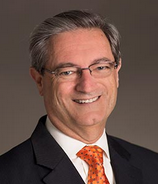 Daniel Day, who has led the Princeton University Office of Communications on an acting basis for the past year, has been named assistant vice president in charge of the office.
Calhoun appointed Princeton’s vice president for campus life
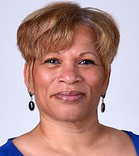 W. Rochelle Calhoun, who since 2008 has been dean of students and vice president for student affairs at Skidmore College, will become vice president for campus life at Princeton University effective Sept. 1.
Infants use expectations to shape their brains
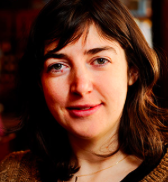 Infants can use their expectations about the world to rapidly shape their developing brains. A series of experiments with infants ages 5 to 7 months has shown that portions of babies’ brains responsible for visual processing respond not just to the presence of visual stimuli, but also to the mere expectation of visual stimuli, according to the researchers from Princeton University, the University of Rochester and the University of South Carolina.
After 85-year search, massless particle with promise for next-generation electronics discovered
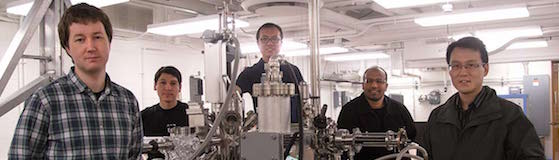 An international team led by Princeton University scientists has discovered an elusive massless particle theorized 85 years ago. The particle could give rise to faster and more efficient electronics because of its unusual ability to behave as matter and antimatter inside a crystal, according to new research.
Service and mentorship focus of Princeton-in-Washington’s landmark year
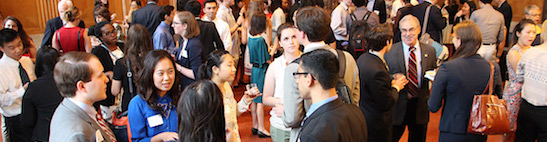
The Princeton-in-Washington Program is celebrating its 50th summer bringing together students studying or interning in Washington D.C., with alumni living in the area. This year’s program runs June 17 to Aug. 1 and will feature a packed schedule of speakers, panel discussions and social events providing Princetonians an inside look at the political, cultural and social life of the nation’s capital.
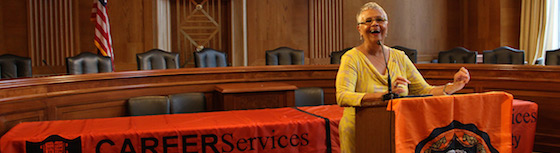
What’s the impact of Supreme Court upholding Affordable Care Act subsidies?
The U.S. Supreme Court upheld on Thursday, June 25, a key provision of the Affordable Care Act, or ACA, keeping health insurance coverage within reach for millions of Americans.
Thirty-four states in the U.S. are reliant on the federal exchange for ACA enrollment of their residents. Now, with the court’s 6-3 ruling, residents of those states can continue to access subsidies to help them pay for health coverage through the federal exchange.
We discussed the ruling with Heather Howard, director of the State Health Reform Assistance Network and lecturer in public affairs at Princeton University’s Woodrow Wilson School of Public and International Affairs.
Engineering students explore Spanish bridges
 With a trip to Spain as a high point, Princeton University undergraduates participated in a semester-long study of Spanish bridge design in the class “A Social and Multi-dimensional Exploration of Structures.”
Princeton’s Annual Giving campaign raises $61.5 million
 Princeton University’s 2014-15 Annual Giving campaign raised $61,490,178 — the highest total in Annual Giving history — with 60.3 percent of undergraduate alumni participating. The results are notable for their strength and breadth across all of Princeton’s constituencies: undergraduate alumni, graduate alumni, parents and friends.
Princeton music course debuts through online learning platform Kadenze

Princeton University is expanding its online course offerings through Kadenze, an online learning platform specifically created to support the arts and creative technologies. Princeton is among the first institutions to utilize Kadenze, which launched June 16.
Read more about the new online music course