
From CNBC: Princeton’s Cecilia Rouse weighs in, saying, “I remain optimistic that we will get through this and that there will be another side, but we will require some patience and some cooperation and some generosity toward our neighbors right now.” https://cnb.cx/2MQ1NGM
Monthly Archives: June 2020
Don’t Cut Off Unemployment Benefits Now
From The Wall Street Journal: In his opinion piece, Princeton’s Alan S. Blinder writes, “On July 31, the economy will likely still be struggling to crawl out of a depression-size abyss, with massive numbers of Americans out of work. Under such circumstances, past Congresses have always extended unemployment benefits, not reduced them.”https://on.wsj.com/3hnk4JK
Tiger Ethics: Helping Family and Evaluating Risk During COVID
From Princeton Alumni Weekly: Laurance S. Rockefeller Professor of Philosophy and Human Values Elizabeth Harman has agreed to answer readers’ questions on pandemic ethics.https://bit.ly/2YymAUV
Stitching, Sewing, Sending Out Hope: Princeton Junior Sally Ruybalid Crafts Masks for Local Hospitals, Businesses, Community Members
From University Press Club: Ruybalid has continued to sew these masks in her dorm: delivering them for free not only to students, but also to essential workers and hospitals. She has sewn over 300 masks to date.https://bit.ly/2MQ1rzW
Students Help Local Businesses Adjust to the “New Normal”
From Town Topics: Recent graduate Sunny Singh Sandhu has maintained ties to the Princeton business community, where he and two classmates founded Tigers for Nassau a few months ago, to help local restaurants have a stronger digital presence during the COVID-19 crisis.https://bit.ly/2C5rn8N
Related from The Daily Princetonian: ‘The Nassau we all love’: Student group aims to help keep town businesses afloat amid COVID-19
Princeton University staff, faculty, others named honorary members by Class of 2020
Princeton University’s senior class have selected 13 individuals as honorary members of the Class of 2020. Every year, the graduating class inducts honorary class members to commemorate faculty, staff, alumni and others who have left a particularly profound impact on their class.https://bit.ly/2XTSf3P
‘I Can’t Compare It to Anything Else’: Class of 2020 Graduates Virtually
From Princeton Alumni Weekly: The Class of 2020’s unusual final semester at Princeton culminated May 31 with the University’s first-ever virtual Commencement. https://bit.ly/2XZbFVb
Released From Iranian Prison, U.S. Student Xiyue Wang Says He Was Held As A ‘Hostage’
From NPR: Graduate student Xiyue Wang, who was released in December after spending more than three years behind bars in Iran,speaks publicly for the first time about the ordeal withSteve Inskeep of NPR’s Morning Edition.https://n.pr/3cYKGgs
Princeton Faculty Voices:
Keeanga-Yamahtta Taylor: How Do We Change America? (The New Yorker)
Imani Perry: ‘Justice Now: A BET Town Hall’ Featuring Stacey Abrams, Brittany Packnett And More (BET)
Omar Wasow:
- The George Floyd protests are sparking a surprising debate in black America (CNN)
- Protests and Public Opinion with Professor Omar Wasow (The Daily Princetonian: Under the Bubble [podcast])
- How Black Lives Matter compares to past social movements (WHYY Radio Times)
- Bricks become fodder for false claims around protests (Associated Press)
- What Protests Can (And Can’t) Do (FiveThirtyEight)
- From BlackPlanet to Black Twitter, the evolution of Black voices on social media [podcast] (Marketplace Tech)
Eddie Glaude:
- Eddie Glaude on this moment in history: ‘I’m tired, I’m weak, I’m worn… then I’m hopeful’ (MSNBC)
- Why this moment demands radical politics (Vox)
- Trump pushes fights over racist legacy while much of America moves in a different direction (The Washington Post)
Douglas Massey: “Go Back to the Neighborhood Where You Belong” (Slate)
Julian Zelizer: Why protesting isn’t enough (CNN) and For 48 hours, the nation’s capital was gripped by chaos. Then everything changed. (The Washington Post)
Naomi Murakawa: Calls to reform, defund, dismantle and abolish the police, explained. (NBC News)
Ellora Derenoncourt: What A 1968 Report Tells Us About The Persistence Of Racial Inequality NPR)
Monica Ponce de Leon: Princeton’s Monica Ponce de Leon: To overcome injustice in architecture, licensure should be “eliminated or radically transformed” (Archinect)
Letter of solidarity from Princeton students
From The Daily Princetonian: “As students, activists, and proponents of a better world, it is our duty to stand up against injustice and fight for the equal treatment of all. We pledge to fight against people and systems that marginalize and mistreat people on the basis of race or any other characteristic. We will continue to be agents of change in promoting justice and equality, both through our academic work and our community interactions, locally and globally.”https://bit.ly/37qV1Rk
Anthropology Professor Laurence Ralph Examines Police Violence
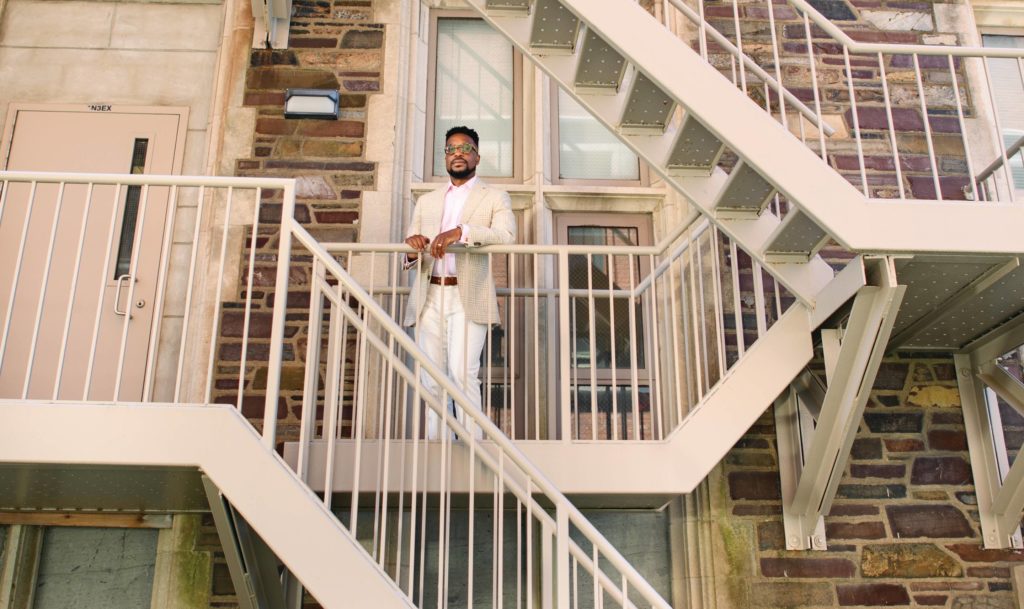
Princeton Alumni Weekly: Fifteen years ago, Laurence Ralph began volunteering with local community groups “to get a break from grad school” at the University of Chicago, not as an academic pursuit, he said. Soon, he was drawn into the African American community’s concerns, particularly police violence. Ralph’s latest book, The Torture Letters: Reckoning with Police Violence (University of Chicago Press), grapples with that legacy of violence. https://bit.ly/2UFFsQx
Together, Princeton Professors ‘Humanize the Data On Policing’
From Princeton Alumni Weekly: Anthropology professor Laurence Ralph and American studies professor Aisha M. Beliso-De Jesús both study policing, but from different angles. Ralph has written about gang and police violence in Chicago, while Beliso-De Jesús studies the criminalization and policing of African diaspora religions like Santeria. Since 2018 the pair have run the Center on Transnational Policing (CTP), a research hub for scholars concerned with race, policing, social justice, and related issues.https://bit.ly/2B7NdaT
Race in the COVID Era: What America’s History of Racism and Xenophobia Means for Today
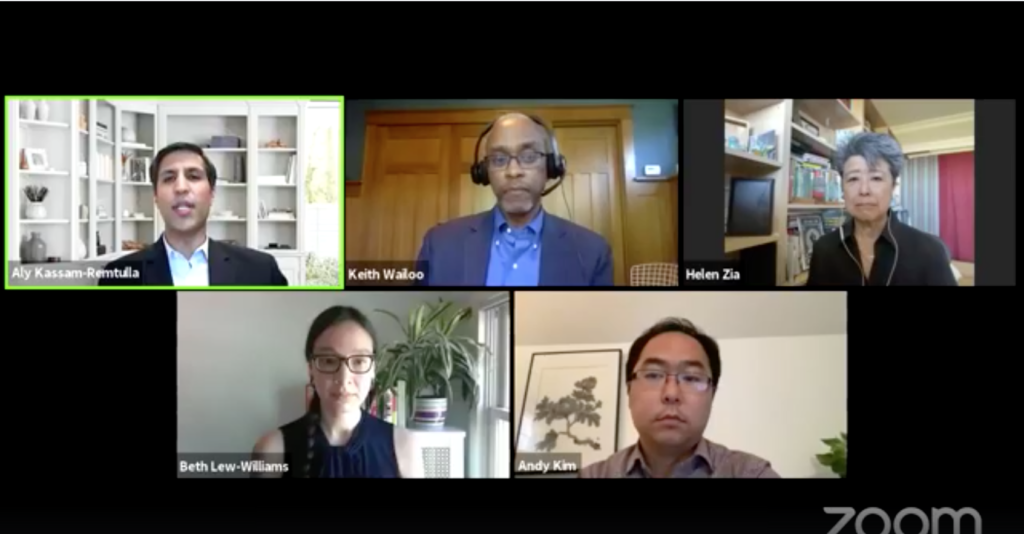
As COVID-19 has swept across the United States, it has unmasked and amplified existing racial inequities. Rampant fear and misinformation has provoked a wave of discrimination, harassment, and hate targeting those of Chinese and Asian descent. The disease has also had a disproportionate toll on historically marginalized populations, including African Americans and Native Americans, due to unequal access to health care, residential segregation, poverty, and incarceration. This conversation situates these developments within the long history of racism, exclusion, and scapegoating in the United States. Panelists will discuss strategies to address marginalization and empower impacted communities.https://bit.ly/30B2cVC
Leon Gordenker, scholar of international relations and ‘wonderful mentor,’ dies at 96
Leon Gordenker, professor of politics, emeritus, and renowned scholar of international relations, died peacefully of natural causes at home in Middelburg, the Netherlands, on May 17. He was 96.https://bit.ly/2UfVgJB
Empowering Ideas: A Philosopher Talks About Bad Hope, Good Hope and Despair
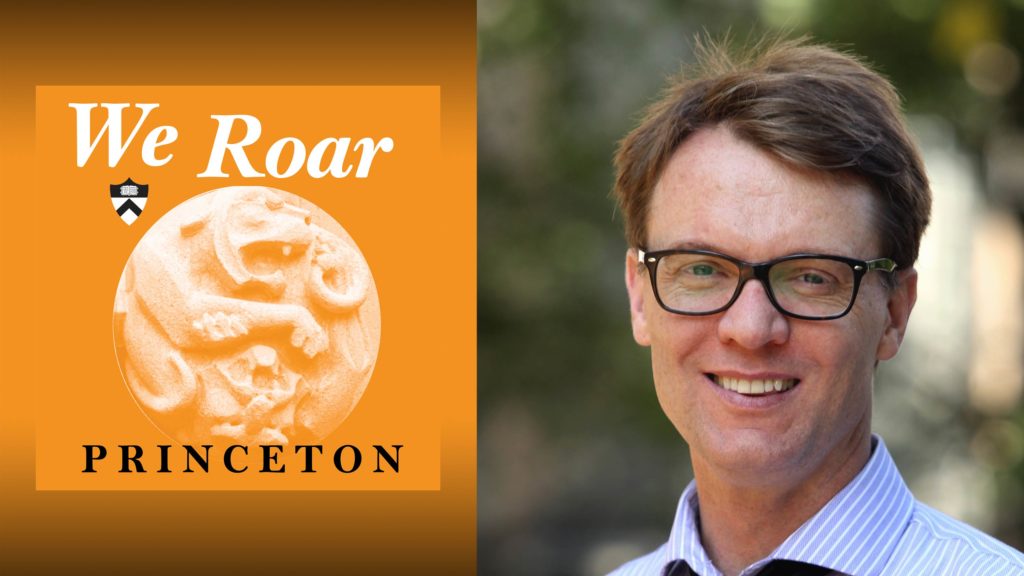
Professor Andrew Chignell of the University Center for Human Values teases out a pathway to hopeful engagement in pessimistic times. http://weroar.princeton.edu/20-empowering-ideas-a-philosopher-talks-about-bad-hope-good-hope-and-despair?utm_source=pwb&utm_medium=email&utm_campaign=communications
Voices in the news:
- Anne Case and Angus Deaton: Trump’s pet theory about the fatal dangers of quarantine is very wrong (The Washington Post)
- Imani Perry: A Little Patch of Something (Paris Review) and Unseen Script Offers New Evidence of a Radical Lorraine Hansberry (The New York Times)
- Keith E. Whittington: Trump says the Supreme Court would allow a ‘very powerful flag-burning statute.’ He’s wrong. (The Washington Post)
- Julian Zelizer: Buildings burn, and Trump talks tough. Where are the healers? (The Washington Post) and It’s been five decades since 1968, and things are somehow worse (CNN)
- Jonathan Mummolo: The Pentagon’s Hand-Me-Downs Helped Militarize Police. Here’s How (Wired)
- Matthew Desmond: How COVID-19 Could Worsen America’s Eviction Crisis (WNPR)
- Sam Wang: NYT decision to publish Tom Cotton op-ed draws widespread backlash (The Hill) and Governor says this complex figure is helping guide the state’s reopening. Here’s what it means. (Nj.com)
Princeton team develops ‘poisoned arrow’ to defeat antibiotic-resistant bacteria
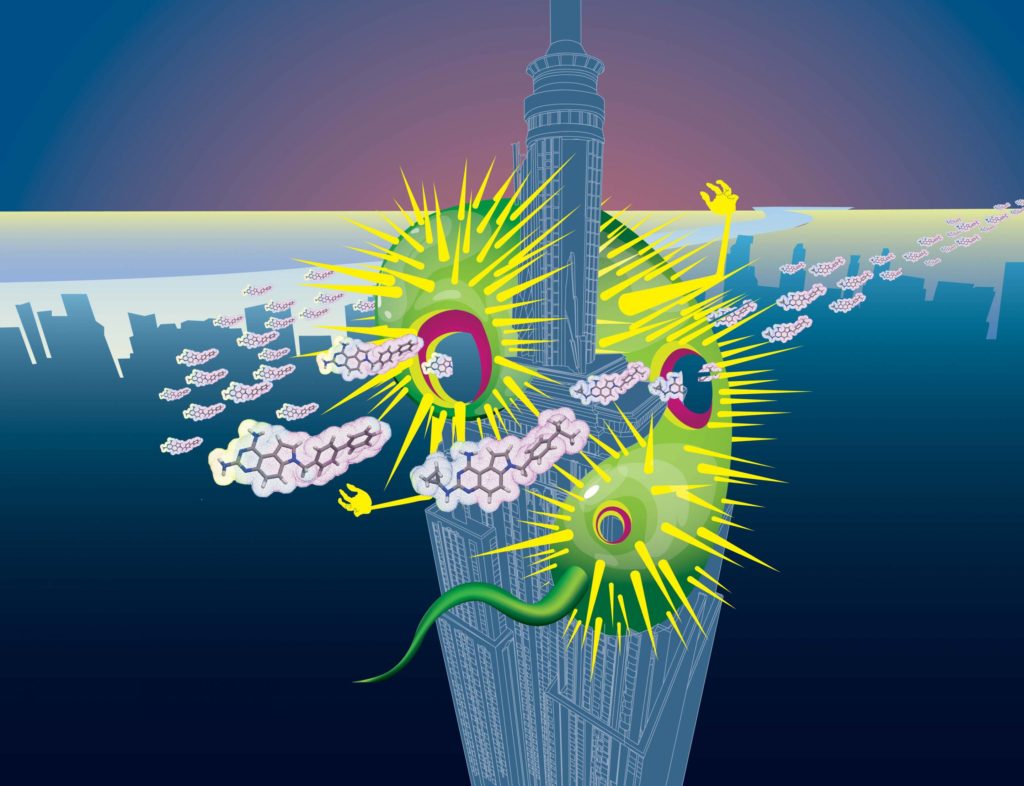
A team of Princeton researchers led by Professor Zemer Gitai has found an antibiotic that can simultaneously puncture bacterial walls and destroy folate within their cells — taking out even monstrous bacteria with the effectiveness of a poisoned arrow — while proving immune to antibiotic resistance.https://bit.ly/2MAK2v3 Related from The Science Times: Princeton Researchers Discover ‘Poison Arrow’ Antibiotic That Resists Immunity https://bit.ly/3dEN513
Could the answer to our COVID-19 problems come from a N.J. lab? Here are 13 promising projects.
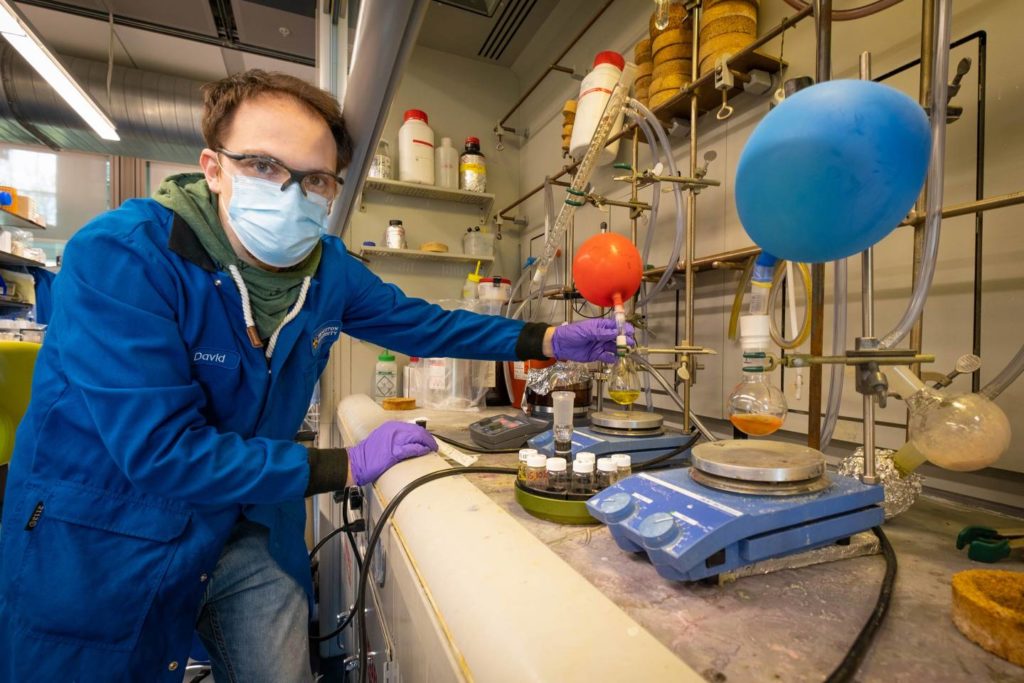
From Nj.com: This piece highlights several Princeton research projects related to the COVID-19 pandemic, including:
• Fluid dynamics research led by Howard Stone.
• A cellphone system for government officials to track the contacts of people diagnosed with COVID-19, developed by Kyle Jamieson.
• A COVID-19 math model that accurately predicts how the virus is spreading, even as it mutates, created by H. Vincent Poor and colleagues.
• Work by Alexander Ploss and colleagues to study how the virus attaches to cells and develop a version of SARS-CoV-2 that is less dangerous for labs to work with.https://bit.ly/3749K4t
For Ph.D. students, virtual defenses brought together friends and family across the globe
May is a busy month for many Princeton graduate students as they defend their dissertations or hold final public orals as last steps in years of work toward a Ph.D. As doctoral candidates were preparing for this rite of passage this spring, they suddenly had to make plans to conduct their defenses virtually, when Princeton moved to online instruction on March 23 due to the COVID-19 pandemic. Five students who have just received their doctorates describe that milestone moment.https://bit.ly/3eUSaT6